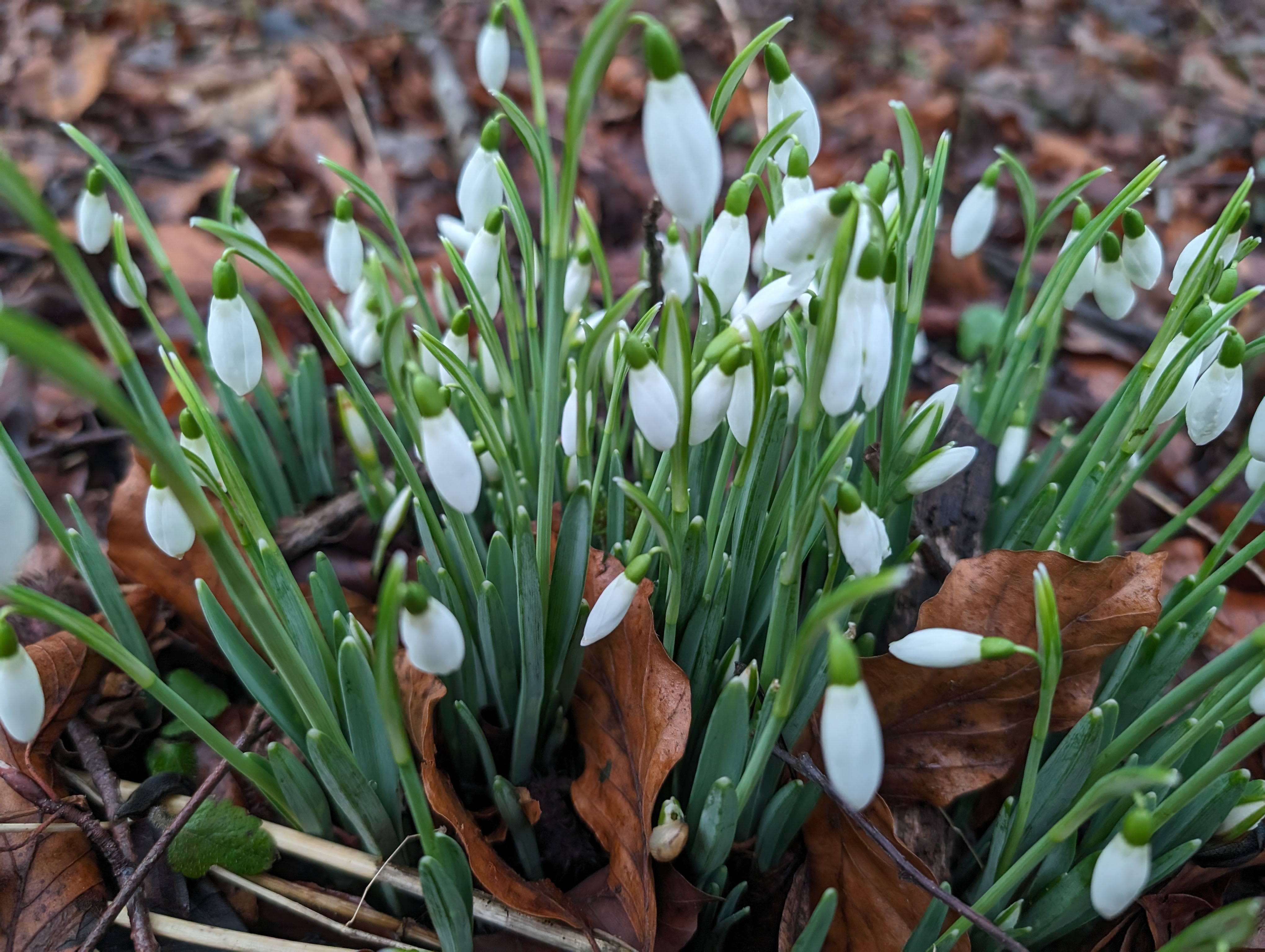

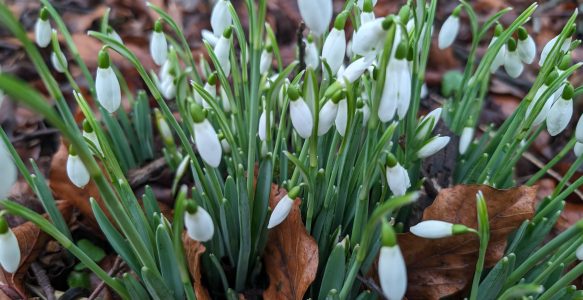
Set off on an early walk this morning along by the deer park to Tile Kiln wood. It’s mild and damp this morning and with a cloud cover. Snowdrops are out in the woods and birds have started singing.

Snowdrops, known scientifically as Galanthus, are a harbinger of spring, captivating nature enthusiasts with their delicate beauty. These small, yet resilient flowers typically bloom in the late winter or early spring, emerging through snow-covered grounds. Snowdrops are characterized by their distinct nodding, bell-shaped white flowers, each with three outer petals that are curiously marked with a green or greenish-yellow pattern. The genus Galanthus comprises about 20 species, with many variations and hybrids, each displaying subtle differences in size, petal shapes, and flowering times.
Snowdrops hold a special place in both horticulture and folklore. In the garden, they are celebrated for their ability to bloom in the coldest months, offering a glimpse of life in otherwise dormant landscapes. This hardiness makes them a symbol of hope and the inevitable renewal that spring brings. In folklore, snowdrops are often associated with purity and innocence, owing to their pristine white petals. They are also a favorite subject in literature and art, symbolizing the transition from winter bleakness to spring vitality. Beyond their aesthetic appeal, snowdrops have also been used in medicine, particularly in Alzheimer’s research, due to their production of galantamine, a compound beneficial in treating mild to moderate forms of the disease.